
What This Page Covers
- How failure-to-yield crashes happen when a driver does not give the right of way to another vehicle, pedestrian, or cyclist as required by Maryland traffic laws.
- Common failure-to-yield situations, including stop signs, traffic signals, left turns, highway merges, roundabouts, parking lots, crosswalks, school zones, and construction areas.
- Types of collisions that can result, such as T-bone crashes, head-on collisions, rear-end accidents, sideswipes, and pedestrian or cyclist crashes.
- Serious injuries that may follow these accidents, including traumatic brain injuries, spinal cord injuries, broken bones, internal bleeding, soft tissue injuries, and psychological trauma.
- How witness statements, traffic-camera footage, skid marks, police reports, and other evidence can help establish who had the right of way and who was responsible.
Why This Matters
- Failure-to-yield crashes can cause severe injuries because many occur at intersections, during left turns, or at highway speeds where impact forces are significant.
- Maryland follows a contributory negligence rule, so proving fault is especially important because even a small finding of fault against an injured person may affect the ability to recover compensation.
- Witness testimony can be critical when drivers disagree about who entered an intersection first, who ignored a traffic signal, or whether distracted or reckless driving contributed to the crash.
- A serious injury can create medical bills, lost income, reduced earning capacity, property damage, pain and suffering, and long-term effects on daily life.
- Insurance companies may try to reduce the value of a claim, making a thorough investigation and complete calculation of current and future losses important.
Key Actions You Can Take
- Get medical care promptly, even if your symptoms seem minor, because some injuries may not be immediately apparent.
- Preserve evidence from the scene, including photographs, witness names and statements, police reports, traffic-camera footage, and information about road signs or signals.
- Keep records of medical treatment, lost wages, vehicle damage, out-of-pocket costs, and how your injuries affect work and daily activities.
- Avoid accepting an early insurance settlement before you understand the full extent of your injuries, future treatment needs, and financial losses.
- Have an experienced Maryland car accident lawyer review the evidence, liability issues, deadlines, and potential damages. Zirkin & Schmerling offers a free consultation.

Every day on Maryland’s busy roads, drivers fail to yield the right of way, causing serious accidents that leave victims with devastating injuries, mounting medical bills, and significant financial hardship. If you’ve been injured in a crash because another driver failed to yield, you need experienced Maryland failure to yield accident lawyers to protect your rights and pursue compensation.
At Zirkin & Schmerling Injury Lawyers our Maryland failure to yield accident lawyers understand the complexities of these cases and how to build strong legal claims that get results. With over 50 years of combined experience handling dog bite injuries, car accidents, and more throughout Maryland, we fight relentlessly to ensure our clients receive fair compensation for their injuries.
Schedule your free consultation today: 410-753-4611.
How a Maryland Failure To Yield Accident Lawyer Can Help You
When you’re recovering from serious injuries after a car crash, the last thing you need is the stress of dealing with an insurance company that wants to minimize your claim. A car accident lawyer from our team can:
- Thoroughly investigate your accident to gather evidence, including witness statements, traffic camera footage, and skid mark analysis
- Determine fault and identify all responsible parties who may be held liable for your injuries
- Handle all communication with the other driver’s insurance company
- Calculate the full extent of your damages, including current and future medical expenses, lost wages, lost earning capacity, and pain and suffering
- Prepare and file your personal injury claims within Maryland’s statute of limitations
- Negotiate aggressively for a fair settlement that covers all your losses
- Take your personal injury lawsuit to trial if necessary to recover the compensation you deserve
Many victims make the mistake of accepting the first settlement offer from an insurance company, which is almost always far less than what their insurance claim is truly worth. Our car accident lawyer team will evaluate your case during a free consultation and explain your legal options.
What Makes an Accident a Failure To Yield?
A failure to yield car accident occurs when a driver doesn’t give the right of way to another vehicle, pedestrian, or cyclist as required by traffic laws. Maryland law clearly defines who has the right of way in various situations, and failure to follow these rules constitutes failure to yield.
Every driver on Maryland roads has a responsibility to understand and obey traffic signals and yield signs. When a driver doesn’t yield properly, they can be found negligent and held liable for any common car accident injuries and property damage.
Common scenarios that constitute failure to yield include:
- Not stopping at a stop sign or red traffic light
- Turning left across oncoming traffic without waiting for a clear opportunity
- Merging onto highways without properly yielding to traffic already on the road
- Proceeding through an intersection controlled by a yield sign without slowing or stopping when necessary
- Not yielding to pedestrians in crosswalks
- Entering a roundabout without yielding to vehicles already in the circle
When You Must Yield on Maryland Roads
Understanding when you must yield on Maryland roads is essential for safe driving. Maryland drivers must yield:
- At yield signs: Always slow down and be prepared to stop; give the right of way to vehicles already on the road you’re entering.
- At stop signs: After coming to a complete stop, yield to any vehicles that arrived before you.
- At traffic signals: When at a traffic signal waiting without a dedicated arrow, yield to oncoming traffic.
- When entering a highway: Yield to other vehicles already on the highway.
- At uncontrolled intersections: The vehicle on the right has the right of way.
- When backing up: Always yield to other traffic when backing out of parking spaces.
- To emergency vehicles: Always pull over and stop when emergency vehicles with active sirens approach.
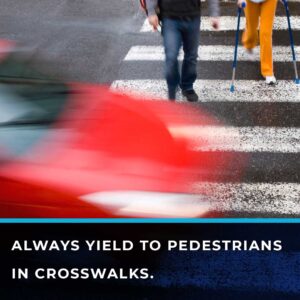
- To pedestrians: Always yield to pedestrians in crosswalks, even if they’re crossing against the traffic signal.
Understanding these rules can help avoid accidents, but unfortunately, distracted driving, speeding, failure to pay attention, and reckless driving often leads to failures to yield.
In Which Scenarios Do Failure To Yield Accidents Occur?
Failure to yield accidents can happen in various settings, but some scenarios are particularly common:

- Intersections: The majority of failure to yield accidents occur at intersections, especially those with four-way stops or traffic lights. A driver may run a red light, fail to stop completely at a stop sign, or ignore a yield sign.
- Left Turns: A driver turning left must yield to oncoming traffic. When they misjudge the speed of approaching vehicles or attempt to “beat” the other driver, serious collisions can result.
- Highway On-Ramps: When a driver forces their way into traffic without yielding, they can cause major accidents at high speeds.
- Parking Lots: Though speeds are typically lower, failure to yield in parking lots is common and can still result in property damage and injuries.
- Pedestrian Crossings: When drivers don’t yield to pedestrians at crosswalks, the consequences can be devastating for the unprotected pedestrian.
- School Zones: Failure to yield in school zones puts children at risk and carries enhanced penalties under Maryland law.
- Construction Areas: Special yield requirements often exist in construction zones, and failing to follow these can endanger workers and other drivers.
In each of these scenarios, a driver’s momentary lapse in judgment or attention can cause accidents with serious consequences for everyone involved.
Types of Vehicle Accidents a Failure To Yield May Cause
When drivers don’t yield the right of way, they can cause several types of accidents, each with the potential for serious injuries:

- Side Impact Accidents (T-Bone Collisions): These occur when one vehicle involved strikes the side of another, often at intersections when a driver runs a stop sign or red light. The sides of vehicles offer less protection than the front or rear, making these crashes particularly dangerous.
- Head-On Collisions: Perhaps the most deadly type of accident, these can occur when a driver doesn’t yield while turning left across traffic and collides with an oncoming vehicle.
- Rear-End Collisions: These may happen when a driver suddenly stops to yield after initially failing to notice a yield sign, causing the vehicle behind to crash into them.
- Sideswipe Accidents: Common during improper merges onto highways or lane changes, these accidents occur when a driver doesn’t yield and moves into a lane already occupied by another vehicle.
- Pedestrian and Cyclist Accidents: When drivers don’t yield at crosswalks or while making turns, they put vulnerable road users at extreme risk.
The severity of these car crashes is often amplified when combined with other factors such as speeding or driving under the influence.
Severe Injuries That May Result From a Failure To Yield Accident
Failure to yield accidents often occur at high speeds or involve the vulnerable sides of vehicles, resulting in severe injuries that can permanently affect victims’ lives. These injuries may include:
- Traumatic Brain Injuries: Even “mild” concussions can have lasting effects on memory, concentration, and mood. More severe TBIs may require lifelong care and rehabilitation.
- Spinal Cord Injuries: Damage to the spinal cord can result in partial or complete paralysis, fundamentally changing an injured victim’s life and requiring extensive ongoing medical treatment.
- Broken Bones: Fractures are common in these accidents, particularly to ribs, arms, legs, and collarbones. Complex fractures may require surgery and extended recovery periods.
- Internal Bleeding: The impact forces in car accidents can cause internal organs to bleed, creating life-threatening emergencies that require immediate medical attention.
- Soft Tissue Injuries: Whiplash and other soft tissue injuries can cause chronic pain and limited mobility, sometimes lasting for years after the accident.
- Psychological Trauma: Beyond physical injuries, many accident victims suffer from PTSD, anxiety, or depression following a traumatic crash.
If you’ve been in an accident, it’s crucial to seek medical attention immediately, even if you don’t think you’re seriously hurt. Some injuries may not be immediately apparent, and a complete medical evaluation creates documentation that will be vital to your personal injury claim.
How Witness Statements Help Establish Liability in Failure To Yield Accidents
In failure to yield cases, determining which driver had the right of way is often contested, making witness statements particularly valuable evidence:
- Independent Verification: Statements from unbiased third parties carry significant weight with insurance companies and juries.
- Establishing Sequence of Events: Witnesses can confirm which vehicle entered an intersection first or whether a driver ran a red light or stop sign.
- Documenting Driver Behavior: Witnesses may have observed distracted driving, such as cell phone use, or other negligent behavior before the accident.
- Filling Gaps in Police Reports: While valuable, police officer reports sometimes contain incomplete information. Witness accounts can provide additional context that helps determine fault.
- Countering Dishonest Claims: When the other driver makes false statements about how the accident occurred, witness testimony can refute these claims.
A skilled car accident attorney will know how to locate witnesses, obtain their statements promptly, and effectively use their testimony to strengthen your case. This is one of many reasons why it’s important to hire an experienced car accident lawyer who understands how to build compelling car accident lawsuits.
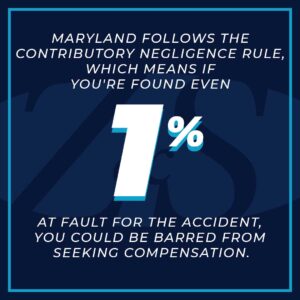
Maryland follows the contributory negligence rule, which means if you’re found even 1% at fault for the accident, you could be barred from seeking compensation. This makes witness statements that establish the other driver’s complete fault particularly crucial in Maryland car accident cases.
Projected Loss Damages You Can Recover After a Failure To Yield Accident
If you’ve been injured due to another driver’s failure to yield, you may be entitled to recover several types of damages:
- Medical Expenses: All costs related to your injury treatment, including emergency room visits, hospital bills, surgeries, medication, physical therapy, and anticipated future medical costs for ongoing care
- Lost Income: Compensation for current and future wages lost while recovering
- Property Damage: Costs to repair or replace your vehicle and any personal property harmed in the accident
- Pain and Suffering: Compensation for physical pain, emotional distress, and diminished quality of life resulting from your injuries
- Loss of Consortium: Damages for the impact your injuries have had on your relationship with your spouse
- Punitive Damages: In cases involving particularly reckless behavior, such as drunk driving combined with failure to yield, additional damages may be awarded to punish the wrongdoer.
The value of your claim will depend on numerous factors, including the severity of your injuries, your prognosis for recovery, the impact on your ability to work, and how the injuries affect your daily life. Our Maryland car accident attorneys will carefully calculate all current and future damages to ensure you seek the full compensation you deserve.
Choose Our Maryland Failure To Yield Accident Lawyers for Your Case

Being injured in a failure to yield accident can be a life-altering experience. As you focus on recovery, let our experienced attorneys handle the legal process.
Our Maryland failure to yield accident lawyers understand the physical, emotional, and financial toll these accidents take on victims and their families. We’re committed to holding negligent drivers accountable and ensuring you recover compensation for your injuries, lost wages, medical expenses, and other damages.
Our firm specializes in personal injury cases resulting from traffic accidents, medical malpractice, and more. This focused expertise means we understand the nuances of failure to yield cases and how to maximize your personal injury compensation. Don’t let an insurance company pressure you into accepting less than you deserve. Contact Zirkin & Schmerling Injury Lawyers today at 410-753-4611 for a free case evaluation. Our car accident attorneys will review your case, explain your legal rights, and discuss how we can help you move forward after your accident.
Failure to Yield Accidents FAQs
Does a failure-to-yield ticket automatically prove fault in a Maryland injury claim?
No. A traffic citation can support a claim, but it does not automatically decide civil liability. Fault is determined from the full evidence, including police reports, witness statements, photographs, video, traffic controls, and the actions of each driver.
Can I pursue compensation if I was a passenger in a failure-to-yield crash?
Yes. A passenger may pursue compensation from the driver or drivers whose negligence caused the crash. Depending on the facts, that could include the driver of the vehicle you were riding in, another driver, or more than one party.
What if the driver who failed to yield was uninsured or underinsured?
Your own uninsured or underinsured motorist coverage may provide compensation when the at-fault driver has no insurance or not enough coverage to pay the full value of your losses. These claims can still be disputed, so policy terms and evidence matter.
Can PIP benefits help after a failure-to-yield accident in Maryland?
Yes, if Personal Injury Protection coverage is available under your policy. PIP may help pay certain medical expenses and lost wages regardless of who caused the crash, subject to the policy terms and available limits.
Should I give the other driver’s insurance company a recorded statement?
You are not required to give the other driver’s insurer a recorded statement simply because an adjuster asks for one. In Maryland, statements about speed, attention, or fault can become important because contributory negligence can affect recovery.
Can social media posts hurt a failure-to-yield accident claim?
Yes. Photos, videos, check-ins, and comments may be reviewed by an insurance company and used to challenge your injuries or your account of the crash. Avoid posting about the accident, your injuries, or your activities while the claim is pending.
Can more than one driver be responsible for a failure-to-yield collision?
Yes. Multi-vehicle crashes can involve several responsible parties, including drivers, employers, or vehicle owners. A full investigation may be needed to determine how each person’s actions contributed to the collision.
Can I recover rental-car or transportation expenses after a failure-to-yield crash?
Reasonable transportation expenses related to the loss of use of your vehicle may be part of a property-damage claim. Keep receipts and records showing why the expense was necessary and how long your vehicle was unavailable.
What happens if both drivers say they had the right of way?
The claim may turn on independent evidence. Traffic-camera footage, dashcam video, witness statements, vehicle damage patterns, skid marks, signal timing, and police observations can help establish which driver had the right of way.
Can I still have a claim if police did not issue the other driver a ticket?
Yes. A lack of a traffic citation does not prevent a personal injury claim. Civil liability can still be established through evidence showing that the other driver failed to yield and caused the crash.